


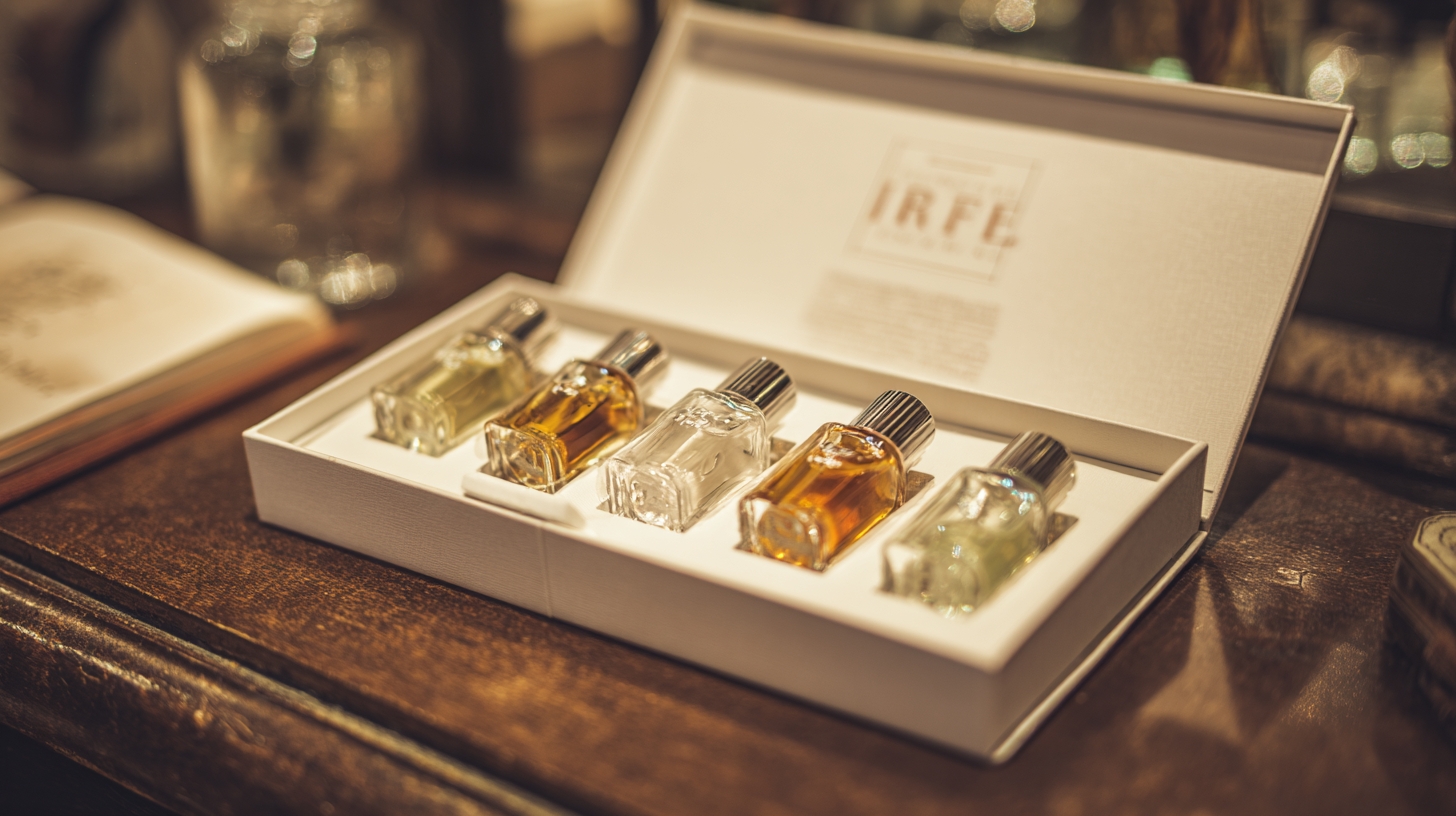
Perfume samples for women make it possible to compare fragrances through the opening, heart and drydown before choosing a larger bottle. The most useful options are official sample vials, coordinated discovery sets and small travel sprays. Decants can serve the same purpose, but they are transferred from a full bottle by a third party rather than filled and labeled by the fragrance house.
A good sampling plan is not about collecting dozens of tiny vials. It is about testing a manageable group of contrasting scent profiles, wearing each one more than once and recording what actually changes on skin and over time.
What Are Perfume Samples?
A perfume sample is a small quantity of fragrance intended for evaluation rather than long-term use. It may be supplied in a dab vial or atomizer, included with an order, sold individually or grouped with related scents in a discovery set.
Several formats are often grouped together under the phrase “mini perfume,” even though they are not identical:
| Format | What it is | Best use |
|---|---|---|
| Official sample vial | A small vial filled and labeled by the fragrance brand or its authorized partner | A focused trial of one specific fragrance |
| Discovery set | Several official samples selected to represent a house, collection or theme | Comparing related compositions in a consistent format |
| Travel spray | A larger portable format intended for repeated wear | Extended testing or carrying an established favorite |
| Decant | Fragrance transferred from a full bottle into a smaller container by a seller or collector | Trying a scent when an official sample is unavailable, provided the source is trustworthy |
| Miniature bottle | A small-scale bottle that may reproduce the design of the full-size presentation | Sampling with a more collectible presentation |
The volume alone does not define the format. A 3 mL atomizer in an official discovery set is still a sample, while a 10 mL spray may be sold as a travel size. Check the product description, concentration and exact fragrance name rather than relying on the word “mini.”
Why Sample Perfume Before Buying a Full Bottle?
Many fragrances change after the first few minutes. Bright citrus, herbs or spices may recede, revealing flowers, woods, resins, vanilla or musk. A quick smell from a blotter can introduce the composition, but it cannot show the complete progression or how comfortable the fragrance feels during an ordinary day.
Sampling helps answer practical questions:
- Do you enjoy the opening and the drydown, or only one stage?
- Does the fragrance suit the settings in which you expect to wear it?
- Does a note that sounds appealing on paper actually work in the finished composition?
- Can you distinguish it from perfumes you already own?
- Do you still want to wear it after the novelty of the first spray has passed?
This page focuses on the sampling process. Readers who are still building a broad shortlist can begin with our guide to perfumes for women. Those looking specifically for independent and art-led compositions can continue with our guide to niche perfumes for women.
How to Choose a Perfume Sample Set
Start with scent direction, not an occasion label
Words such as “day,” “evening,” “romantic” or “bold” can be useful prompts, but they are subjective. Begin with the materials and contrasts you already understand. Someone drawn to airy flowers and soft musk needs a different sample group from someone looking for pepper, leather, tobacco or oud.
If your preferences are not yet clear, choose a set with deliberate variety. A floral musk, a rose-and-woods composition, a leather fragrance, a spicy oud and a patchouli-tobacco scent will reveal more than five perfumes built around nearly identical vanilla bases.
Check the exact concentration
Eau de Parfum, Eau de Toilette and Parfum are not interchangeable labels. Concentration can influence how a fragrance is structured and experienced, but it does not provide a universal prediction of strength or wear time. Make sure the sample matches the concentration of the bottle you may later consider.
Choose enough volume for more than one impression
The useful number of wears depends on the vial, atomizer and how much is applied. More volume generally allows repeat testing, but there is no reliable universal conversion from milliliters to a fixed number of sprays. A set that supports several considered wears is more informative than a single hurried test.
Read the note lists comparatively
Do not treat note lists as literal ingredient recipes. They describe the intended olfactory structure and may include materials, accords and imaginative effects. Their greatest value during sampling is comparison: look for the note that connects two fragrances and the notes that send them in different directions. IRFĒ’s fragrance ingredients section profiles selected perfume materials and their sourcing stories.
How to Test Perfume Samples at Home
- Preview on a blotter. Use paper to screen several possibilities without placing all of them on skin at once. Label each blotter immediately.
- Narrow the group. Choose one or two fragrances that deserve a complete wear rather than trying to evaluate an entire set simultaneously.
- Test one fragrance on skin. Follow the product directions and avoid layering it over another scented product if the goal is a clear comparison. If irritation occurs, discontinue use.
- Notice the stages. Record the opening, the transition into the heart and the later drydown. Exact timing varies by composition and wearer, so use observations rather than a rigid timetable.
- Repeat the wear. A second trial can show whether the first impression was affected by weather, setting, mood or another strong smell nearby.
- Compare before ranking. Finish testing the relevant samples before deciding which one deserves a larger format.
Skin sensitivity and scent sensitivity differ from person to person. A product that is comfortable for one wearer may not suit another, and a pleasant blotter test does not guarantee the same experience on skin. Follow label directions and any personal medical guidance that applies to you.
A Simple Perfume-Sampling Scorecard
A short record is more useful than trying to remember several drydowns at the end of a week. For each sample, note:
- First impression: the most noticeable opening facets.
- Heart: what becomes clearer after the opening settles.
- Drydown: the woods, musk, amber, vanilla, leather or other effects that remain.
- Sweetness: dry, lightly sweet, balanced or distinctly gourmand.
- Texture: airy, powdery, creamy, green, smoky, resinous or dense.
- Comfort: whether you want to continue wearing it.
- Use case: where it fits naturally in your own routine.
- Final decision: no, test again, travel size or full bottle.
The final category prevents a common sampling trap: treating every scent you like as a future full-bottle purchase. Some fragrances are enjoyable discoveries but do not fill a real place in a wardrobe. Others need another wear before the decision becomes clear.
Five Perfume Samples in the IRFĒ Discovery Set
The IRFĒ Discovery Set contains five 3 mL Eau de Parfums: Centifolia Rose, Saffron Leather, Smoldering Pepper, Marshmallow Musk and Patchouli Forever Worn. It is a useful example of a discovery set built around contrast rather than five minor variations of one theme.
Marshmallow Musk: floral, airy and softly gourmand
Marshmallow Musk opens with Earl Grey tea, magnolia petals and lavender petals. Fresh jasmine, marshmallow cotton and iris nectar form the heart, followed by fluffy woods, airy vanilla and powdery musk. Sample it when the goal is a soft floral musk with a gentle gourmand direction rather than a dense dessert effect.
Centifolia Rose: luminous rose over polished woods
Centifolia Rose combines bergamot, pink pepper and pear with Rose Damascena, orris and neroli. Cedarwood, sandalwood and white musk shape the base. It offers a direct comparison between a bright fruity-spiced opening, a floral heart and a smoother woody-musky drydown.
Saffron Leather: aromatic spice and raw leather
Saffron Leather begins with bergamot, cinnamon, petitgrain and cassis before moving through saffron, cistus leaves, burnt rose and violet. Raw leather, sandalwood and cedarwood form the base. Choose it to explore the contrast between freshness, floral spice and a dry leather structure.
Smoldering Pepper: pepper, incense and smoky woods
Smoldering Pepper places black pepper with saffron and olibanum, then develops through labdanum, Indonesian patchouli and cypriol. Vanilla Bourbon, smoked leather and oud create the base. It shows how vanilla can soften a dark spicy composition without turning it into a conventional vanilla gourmand.
Patchouli Forever Worn: honeyed tobacco and patchouli
Patchouli Forever Worn opens with honey, tobacco and davana. Its heart includes lavandin, Clearwood and amber, while patchouli, sandalwood and cedarwood anchor the base. Sample it if you want to understand patchouli in a warm, woody and tobacco-inflected setting.
Where to Find Authentic Perfume Samples
The clearest route is the fragrance house itself or an authorized retailer. Official discovery sets also make comparison easier because the vials use consistent labeling and presentation.
A decant is not automatically inauthentic, but its reliability depends on the seller’s sourcing, transfer process, storage and labeling. Look for a clear business identity, the exact fragrance and concentration, a stated volume, legible packaging and transparent policies. Be cautious when the source of the liquid is vague or the presentation imitates an official miniature without clear disclosure.
Free samples are not a universal entitlement. Some brands include them with qualifying orders, some boutiques provide them during a consultation, and many houses sell discovery sets. Availability and terms change, so check the brand’s current policy rather than relying on an old list of “free perfume sample” offers.
How to Store Perfume Samples
Heat, light and repeated exposure to air can affect fragrance quality. Keep vials closed, upright when the closure requires it and away from windows, radiators and hot cars. A drawer or closed cabinet in a temperature-stable room is usually more suitable than a bright bathroom shelf.
Keep the original label whenever possible. If a decant arrives with minimal information, record the fragrance name, concentration and source. There is no useful universal rule that every sample must be discarded after a fixed number of months; storage conditions and packaging differ.
Frequently Asked Questions
How many perfume samples should I test at once?
Use blotters to screen a small group, then give one or two finalists separate skin wears. Testing too many fragrances simultaneously makes it difficult to distinguish their transitions and drydowns.
Is a 3 mL perfume considered a sample?
Yes, it can be. The official IRFĒ Discovery Set, for example, contains five 3 mL Eau de Parfums. Format is defined by how the product is presented and intended to be used, not by one universal volume threshold.
Are perfume samples the same formula as a full bottle?
An official sample should identify the exact fragrance and concentration it represents. Check that the names match, especially when a fragrance is sold as Eau de Toilette, Eau de Parfum and Parfum versions. A third-party decant is represented as liquid transferred from a full bottle, so provenance becomes more important.
Should perfume be tested on paper or skin?
Both can be useful for different stages. Paper helps compare openings and narrow a group; a separate skin wear shows how the composition develops for the wearer. Follow the label directions and discontinue use if irritation occurs.
Do perfume samples work as travel perfumes?
Some atomizer samples are convenient for travel, but closures and packaging vary. Check that the vial is secure and comply with the transport rules that apply to the trip. A purpose-built travel spray may be more practical for frequent use.
Final Thoughts
The best perfume samples for women are not necessarily the largest set or the longest list of famous names. They are the ones that make a real comparison possible: clearly labeled fragrances, enough contrast to reveal preferences and enough volume for considered wear.
Start with a manageable group, test the complete development and keep notes simple. A sample has done its job when it turns an uncertain full-bottle decision into a clear yes, no or “wear it once more.”
